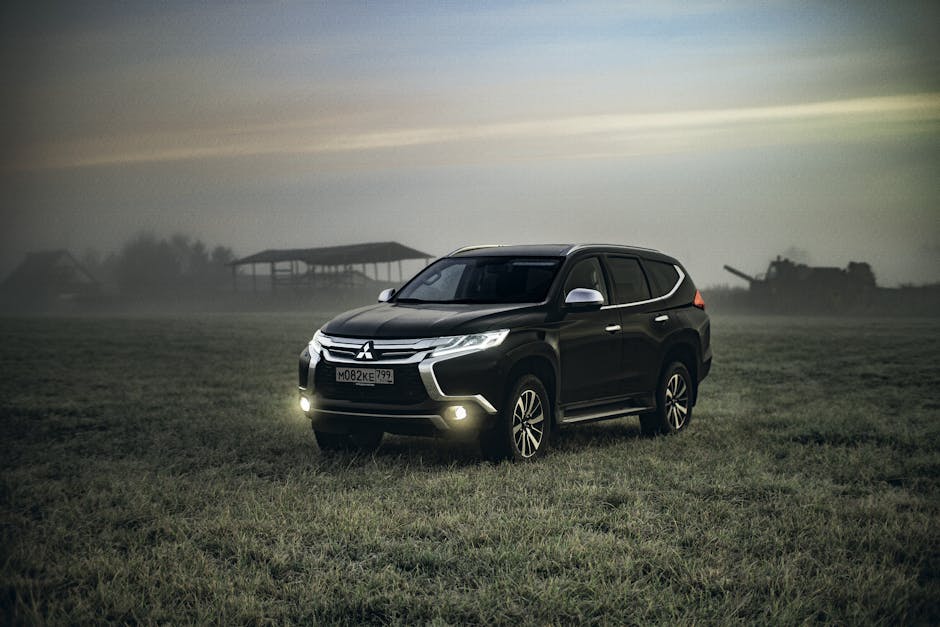
Buying a LiXiang L9 in 2025 is a decision that requires careful thought, because this Chinese hybrid combines premium comfort with the realities of the Russian market. In 2024, 24,000 units were sold, but by January 2025 monthly sales had dropped from 2,105 to 955 cars amid complaints about service and reliability. Priced from 6.1 to 9.3 million rubles, with 449 hp, a 52.3 kWh battery and up to 1,412 km of range, the L9 competes with the BMW X7 and Mercedes GLS. The absence of official dealers and Russia’s harsh operating conditions, however, create real risks. Is the L9 worth buying? I studied owner reviews on Drive2 and Telegram, expert data and online sources to outline the pros, cons and recommendations.
Why the LiXiang L9 attracts attention
The L9 is a range-extender hybrid with two electric motors, a 1.5-litre petrol generator and air suspension. Its OLED screens, Snapdragon 8295P chip and Dolby Vision/Atmos support create a “tablet on wheels” feel. In Russia the model proved popular: in 2024 it outsold the Geely Monjaro in the premium segment. Yet the lack of Li Auto dealers and complicated repairs remain hot topics. Avtostat forecasts that official deliveries will not begin until the fourth quarter of 2025. Buying an L9 is therefore a trade-off between advanced technology and ownership risks.
LiXiang L9 pros: why owners choose it
The L9 stands out in the premium crossover segment. Here are the key advantages based on owner feedback and tests.
1. Comfort and space
The L9’s cabin is a benchmark of luxury: leather trim, massage seats in the first and second rows, a fridge and three rows of seating. Its dimensions (5,218 × 1,998 × 1,800 mm) comfortably accommodate a family of six. Drive2 owners praise the soft air suspension, comparing it to a “magic carpet.” One driver noted that children sleep through potholes on the highway. The L9 is therefore ideal for long journeys.
2. Technology and multimedia
Three Samsung OLED screens, a lidar and Level 2+ driver assistance are powered by a Snapdragon 8295P chip that processes data in milliseconds. 110km.ru testers say voice control and Dolby Atmos create a “cinema on wheels.” The 2025 facelift added a 52.3 kWh battery and 4C fast charging (80 % in 10 minutes). As a result, the L9’s technology outpaces rivals such as the Chery Tiggo 9.
3. Efficiency
The hybrid powertrain returns 5.9 l/100 km in city driving. Home charging costs 200–300 rubles for 215 km of range. One Telegram owner calculated annual savings of 100,000 rubles versus a BMW X5 (11 l/100 km). A full 65-litre tank plus battery gives 1,315 km of range. The L9 is therefore economical on long trips.
4. Performance and handling
Acceleration to 100 km/h in 5.3 seconds is impressive for a 2.5-tonne crossover. All-wheel drive and dual-valve CDC air suspension deliver stable handling. Drom testers note that the L9 cruises comfortably at 160 km/h, although top speed is limited to 180 km/h. A Moscow owner praised precise lane changes on the MKAD. The L9 therefore appeals to enthusiastic drivers.
5. Price and equipment
For 6.1–9.3 million rubles the L9 offers Range Rover-level kit: driver assistance, massage seats and a panoramic roof. Rivals (BMW X7, Mercedes GLS) start at 12 million rubles. On Avito a 2024 L9 Ultra can be found for 8 million rubles—cheaper than comparable European models. The L9 therefore attracts buyers with its value.
LiXiang L9 cons: what raises concerns
Despite its strengths, the L9 has drawbacks that affect the purchase decision. Here are the main issues.
1. No official service network
Li Auto has no official dealers in Russia; cars arrive via parallel import. “Grey” dealers such as Rolf and Avtodom offer 1–2 years of warranty, but repairs become expensive once it expires. X users complain that parts can take two to three months to arrive. Replacing an air-suspension compressor, for example, costs 100,000 rubles. Service is therefore the model’s weakest point.
2. Reliability concerns
Air suspension and electronics are the most vulnerable areas. Drive2 data shows 60 % of breakdowns involve the compressor or software glitches. Winter road salt corrodes air springs, and firmware 4.6.5 caused driver-assistance errors in 10 % of 2024 cars. Battery repairs cost 500,000–1,000,000 rubles. Reliability therefore remains questionable.
3. Parts availability
Parts are scarce and must be imported from China. 110km.ru reports a differential seal took 10 weeks, while an air spring costs 51,000 rubles. Non-genuine parts on Avito are unreliable; Drom users warn they often fail within six months. Waiting for parts therefore increases ownership costs.
4. Adaptation to Russian conditions
The L9 was designed for China’s cleaner roads and milder climate. Russian potholes and frost accelerate suspension wear, while road salt damages the body. One Telegram owner reported corrosion on the wheel arches after a year. Interface localisation is also imperfect; Drive2 users note difficulties with the companion app. The L9 therefore requires additional preparation.
5. Depreciation
The L9 loses 20–30 % of its value in the first year. On Avito a 2023 example with 4,000 km was listed at 6 million rubles instead of the original 8 million. A Drive2 owner sold his car in a month at a 1.5-million-ruble loss. By comparison, a BMW X5 depreciates 15–20 %. Resale value is therefore less attractive.
Who is the LiXiang L9 suited for?
The L9 suits buyers seeking comfort and technology at a lower price than European rivals. It is ideal for families and city dwellers with access to charging and specialist workshops. Drom reviewers praise its space and performance, but owners in regions without qualified technicians face higher risk. Moscow and St Petersburg have centres such as Antcar (+7 (915) 298-91-74), while smaller towns do not. The L9 is therefore best suited to major cities.
Comparison with rivals
How the L9 stacks up against 2025 alternatives:
- BMW X7 (12–15 million rubles): more reliable and better insulated, with widely available parts, but significantly more expensive.
- Mercedes GLS (13–16 million rubles): higher status and easier servicing, yet consumes 12–15 l/100 km.
- Chery Tiggo 9 (5–7 million rubles): cheaper and more reliable, with an established dealer network, but less advanced technology.
- Aito M9 (10–14 million rubles): comparable technology at a higher price, with projector headlights and ottomans as plus points.
The L9 wins on price and equipment but loses on service and reliability. The right choice depends on your priorities.
Cost of ownership
Owning a LiXiang L9 in 2025 requires a realistic budget. Here is the breakdown:
- Purchase price: 6.1–9.3 million rubles.
- Maintenance and prevention: 30,000–50,000 rubles per year (diagnostics, suspension drying).
- Repairs: 100,000–1,000,000 rubles (suspension, battery).
- Comprehensive insurance: 200,000–300,000 rubles per year.
- Fuel and charging: 50,000–80,000 rubles per year (at 20,000 km).
Total: 300,000–500,000 rubles per year including depreciation. One Drive2 owner spent 800,000 rubles over two years but avoided major failures. A BMW X7 costs 400,000–600,000 rubles annually. The L9 is cheaper to run day-to-day, but repairs can be more painful.
What owners say
Reviews on Avito and Drom are split: 70 % praise comfort and economy, 30 % complain about service and breakdowns. A Telegram driver called the L9 a “yacht on the road” but highlighted expensive parts. Another resolved software issues for 30,000 rubles. X opinions are similar: owners value the technology but worry about reliability. Impressions therefore depend on individual experience.
Outlook for 2025–2030
Buying a LiXiang L9 in 2025 is a bet on the future. By the fourth quarter of 2025 Li Auto may open official dealerships in Russia, cutting parts wait times to one month. The hybrid segment is forecast to grow to 10 %, and the refreshed L9 (new battery, rear-axle steering) should remain competitive. Without official service, however, risks will persist. Avtostat predicts sales could reach 30,000 units by 2027. The L9 has potential, but buyers must be prepared.
Verdict: should you buy an L9?
Buying a LiXiang L9 in 2025 makes sense if you are prepared for the costs and live in a city with specialist workshops. The pros—comfort, technology, efficiency and price—make it attractive for families and gadget enthusiasts. The cons—service, reliability, parts and adaptation—require a 300,000–500,000-ruble annual budget. If you value peace of mind, consider the Chery Tiggo 9 or wait for official dealers. Always check the electronic title, secure a warranty and use trusted specialists such as Pnevmomaster (+7 (495) 021-00-21). The L9 delivers comfort with caveats.